> ## Documentation Index
> Fetch the complete documentation index at: https://docs.scrapegraphai.com/llms.txt
> Use this file to discover all available pages before exploring further.
# 📄 Pagination Examples
> Walk through paginated listings with the Extract service
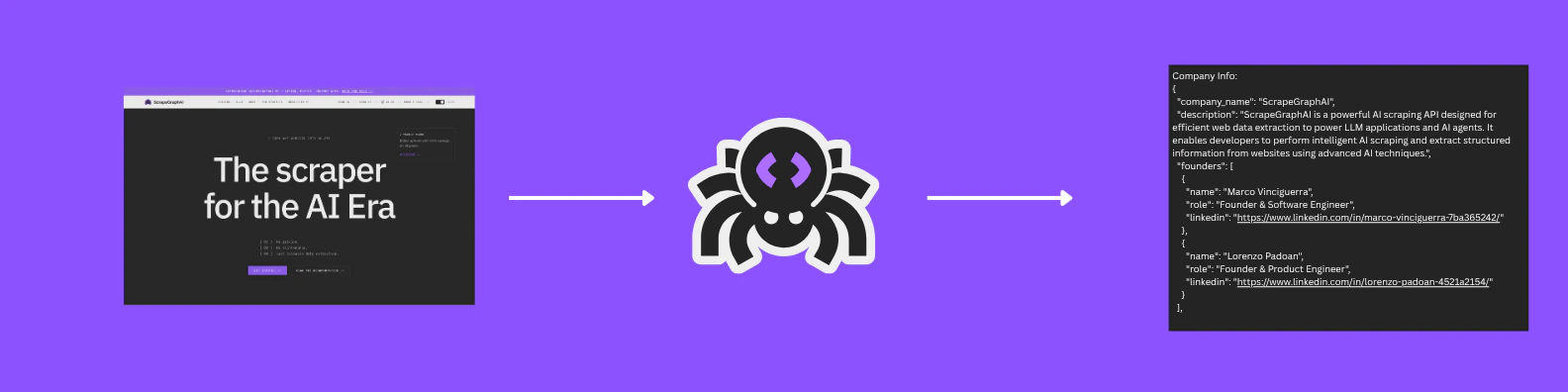 Learn how to walk through paginated listings with ScrapeGraphAI's Extract service. v2 does not ship a built-in `total_pages` parameter — instead, you iterate through each page URL yourself and merge the results. This example demonstrates how to scrape e-commerce products, news articles, or any paginated content across multiple pages.
## The Goal
We'll extract product information from an e-commerce website across multiple pages, including:
| Field | Description |
| ------------ | ------------------- |
| Product Name | Name of the product |
| Price | Product price |
| Rating | Customer rating |
| Image URL | Product image |
| Description | Product description |
## Python SDK - Synchronous Example
```python theme={null}
#!/usr/bin/env python3
"""
Extract Pagination Example (Sync)
Iterate through paginated listings and merge the extracted items.
"""
import json
import os
import time
from typing import List, Optional
from dotenv import load_dotenv
from pydantic import BaseModel
from scrapegraph_py import ScrapeGraphAI
load_dotenv()
class ProductInfo(BaseModel):
name: str
price: Optional[str] = None
rating: Optional[str] = None
image_url: Optional[str] = None
description: Optional[str] = None
class ProductList(BaseModel):
products: List[ProductInfo]
def page_urls(base: str, pages: int) -> list[str]:
# Adapt this to your target site's pagination scheme.
return [f"{base}&page={i}" for i in range(1, pages + 1)]
def main():
sgai = ScrapeGraphAI() # reads SGAI_API_KEY from env
base_url = "https://www.amazon.in/s?k=tv"
prompt = "Extract all product info including name, price, rating, image_url, and description"
schema = ProductList.model_json_schema()
all_products: list[dict] = []
start = time.time()
for url in page_urls(base_url, pages=3):
res = sgai.extract(prompt, url=url, schema=schema)
if res.status != "success":
print(f"Page failed: {url} - {res.error}")
continue
products = (res.data.json_data or {}).get("products", [])
print(f"{url} -> {len(products)} products ({res.elapsed_ms}ms)")
all_products.extend(products)
print(f"\nDone in {time.time() - start:.1f}s. Total: {len(all_products)} products")
print(json.dumps(all_products[:3], indent=2, ensure_ascii=False))
if __name__ == "__main__":
main()
```
## Python SDK - Asynchronous Example
```python theme={null}
#!/usr/bin/env python3
"""
Extract Pagination Example (Async)
Fetch every page in parallel with AsyncScrapeGraphAI.
"""
import asyncio
import json
import time
from typing import List, Optional
from dotenv import load_dotenv
from pydantic import BaseModel
from scrapegraph_py import AsyncScrapeGraphAI
load_dotenv()
class ProductInfo(BaseModel):
name: str
price: Optional[str] = None
rating: Optional[str] = None
image_url: Optional[str] = None
description: Optional[str] = None
class ProductList(BaseModel):
products: List[ProductInfo]
async def main():
base_url = "https://www.amazon.in/s?k=tv"
prompt = "Extract all product info including name, price, rating, image_url, and description"
schema = ProductList.model_json_schema()
urls = [f"{base_url}&page={i}" for i in range(1, 4)]
start = time.time()
async with AsyncScrapeGraphAI() as sgai:
tasks = [sgai.extract(prompt, url=u, schema=schema) for u in urls]
results = await asyncio.gather(*tasks)
all_products: list[dict] = []
for url, res in zip(urls, results):
if res.status != "success":
print(f"Page failed: {url} - {res.error}")
continue
products = (res.data.json_data or {}).get("products", [])
print(f"{url} -> {len(products)} products ({res.elapsed_ms}ms)")
all_products.extend(products)
print(f"\nDone in {time.time() - start:.1f}s. Total: {len(all_products)} products")
print(json.dumps(all_products[:3], indent=2, ensure_ascii=False))
if __name__ == "__main__":
asyncio.run(main())
```
## JavaScript SDK Example
```javascript theme={null}
import { ScrapeGraphAI } from 'scrapegraph-js';
import 'dotenv/config';
const sgai = ScrapeGraphAI(); // reads SGAI_API_KEY from env
const res = await sgai.extract({
url: 'https://www.amazon.in/s?k=tv&crid=1TEF1ZFVLU8R8&sprefix=t%2Caps%2C390&ref=nb_sb_noss_2',
prompt: 'Extract all product info including name, price, rating, and image_url',
});
if (res.status === 'success') {
console.log('Response:', JSON.stringify(res.data?.json, null, 2));
}
```
## Example Output
```json theme={null}
{
"products": [
{
"name": "Samsung 55-inch QLED 4K Smart TV",
"price": "₹45,999",
"rating": "4.5 out of 5 stars",
"image_url": "https://example.com/samsung-tv.jpg",
"description": "Experience stunning 4K resolution with Quantum Dot technology"
},
{
"name": "LG 65-inch OLED 4K Smart TV",
"price": "₹89,999",
"rating": "4.7 out of 5 stars",
"image_url": "https://example.com/lg-tv.jpg",
"description": "Perfect blacks and infinite contrast with OLED technology"
},
{
"name": "Sony 50-inch Bravia 4K Smart TV",
"price": "₹52,999",
"rating": "4.6 out of 5 stars",
"image_url": "https://example.com/sony-tv.jpg",
"description": "Crystal clear picture with X1 4K HDR processor"
}
]
}
```
## Pagination in v2
v2 does not have a built-in `total_pages` parameter. Instead, build the list of page URLs yourself and call `extract` once per page — either sequentially (shown in the sync example) or concurrently via `AsyncScrapeGraphAI` and `asyncio.gather`.
For JS-rendered pagination, combine `extract` with `FetchConfig`:
```python theme={null}
from scrapegraph_py import FetchConfig
res = sgai.extract(
prompt,
url=url,
schema=schema,
fetch_config=FetchConfig(mode="js", scrolls=2, wait=1500),
)
```
## Best Practices
### 1. **Start Small**
* Begin with 1-2 pages for testing
* Gradually increase to your target number
* Monitor API usage and rate limits
### 2. **Optimize Prompts**
* Be specific about what data you want
* Include pagination context in your prompt
* Use structured output schemas
### 3. **Handle Errors Gracefully**
* Implement proper error handling
* Use try-catch blocks
* Log errors for debugging
### 4. **Consider Rate Limiting**
* Respect API rate limits
* Use delays between requests if needed
* Implement exponential backoff
### 5. **Monitor Performance**
* Track request duration
* Monitor success rates
* Log pagination results
## Common Use Cases
### E-commerce Product Scraping
```python theme={null}
# Extract products from multiple category pages
urls = [f"https://example-store.com/electronics?page={i}" for i in range(1, 6)]
for url in urls:
res = sgai.extract(
"Extract all product information including name, price, rating, and availability",
url=url,
schema=ProductList.model_json_schema(),
)
```
### News Article Collection
```python theme={null}
# Collect articles from multiple news pages
urls = [f"https://example-news.com/technology?page={i}" for i in range(1, 4)]
for url in urls:
res = sgai.extract(
"Extract article titles, summaries, publication dates, and author names",
url=url,
schema=ArticleList.model_json_schema(),
)
```
### Job Listing Aggregation
```python theme={null}
# Gather job listings from multiple pages
urls = [f"https://example-jobs.com/search?q=python&page={i}" for i in range(1, 5)]
for url in urls:
res = sgai.extract(
"Extract job titles, companies, locations, salaries, and requirements",
url=url,
schema=JobList.model_json_schema(),
)
```
## Troubleshooting
### Common Issues
1. **Pagination Not Working**
* Check if the website supports pagination
* Verify the URL structure includes page parameters
* Double-check that your URL builder produces reachable pages
2. **Rate Limiting**
* Reduce the number of concurrent requests
* Implement delays between requests
* Check your API usage limits
3. **Incomplete Data**
* Increase `FetchConfig(scrolls=...)` for dynamic content
* Add `FetchConfig(wait=...)` (milliseconds) for slow-loading pages
* Refine your prompt for better extraction
4. **API Errors**
* Verify your API key is valid
* Check the website URL is accessible
* Review error messages for specific issues
Learn more about our AI-powered extraction service
Explore our Python SDK documentation
***
Have a suggestion for a new example? [Contact us](mailto:contact@scrapegraphai.com) with your use case or contribute directly on [GitHub](https://github.com/ScrapeGraphAI/scrapegraph-sdk).
Learn how to walk through paginated listings with ScrapeGraphAI's Extract service. v2 does not ship a built-in `total_pages` parameter — instead, you iterate through each page URL yourself and merge the results. This example demonstrates how to scrape e-commerce products, news articles, or any paginated content across multiple pages.
## The Goal
We'll extract product information from an e-commerce website across multiple pages, including:
| Field | Description |
| ------------ | ------------------- |
| Product Name | Name of the product |
| Price | Product price |
| Rating | Customer rating |
| Image URL | Product image |
| Description | Product description |
## Python SDK - Synchronous Example
```python theme={null}
#!/usr/bin/env python3
"""
Extract Pagination Example (Sync)
Iterate through paginated listings and merge the extracted items.
"""
import json
import os
import time
from typing import List, Optional
from dotenv import load_dotenv
from pydantic import BaseModel
from scrapegraph_py import ScrapeGraphAI
load_dotenv()
class ProductInfo(BaseModel):
name: str
price: Optional[str] = None
rating: Optional[str] = None
image_url: Optional[str] = None
description: Optional[str] = None
class ProductList(BaseModel):
products: List[ProductInfo]
def page_urls(base: str, pages: int) -> list[str]:
# Adapt this to your target site's pagination scheme.
return [f"{base}&page={i}" for i in range(1, pages + 1)]
def main():
sgai = ScrapeGraphAI() # reads SGAI_API_KEY from env
base_url = "https://www.amazon.in/s?k=tv"
prompt = "Extract all product info including name, price, rating, image_url, and description"
schema = ProductList.model_json_schema()
all_products: list[dict] = []
start = time.time()
for url in page_urls(base_url, pages=3):
res = sgai.extract(prompt, url=url, schema=schema)
if res.status != "success":
print(f"Page failed: {url} - {res.error}")
continue
products = (res.data.json_data or {}).get("products", [])
print(f"{url} -> {len(products)} products ({res.elapsed_ms}ms)")
all_products.extend(products)
print(f"\nDone in {time.time() - start:.1f}s. Total: {len(all_products)} products")
print(json.dumps(all_products[:3], indent=2, ensure_ascii=False))
if __name__ == "__main__":
main()
```
## Python SDK - Asynchronous Example
```python theme={null}
#!/usr/bin/env python3
"""
Extract Pagination Example (Async)
Fetch every page in parallel with AsyncScrapeGraphAI.
"""
import asyncio
import json
import time
from typing import List, Optional
from dotenv import load_dotenv
from pydantic import BaseModel
from scrapegraph_py import AsyncScrapeGraphAI
load_dotenv()
class ProductInfo(BaseModel):
name: str
price: Optional[str] = None
rating: Optional[str] = None
image_url: Optional[str] = None
description: Optional[str] = None
class ProductList(BaseModel):
products: List[ProductInfo]
async def main():
base_url = "https://www.amazon.in/s?k=tv"
prompt = "Extract all product info including name, price, rating, image_url, and description"
schema = ProductList.model_json_schema()
urls = [f"{base_url}&page={i}" for i in range(1, 4)]
start = time.time()
async with AsyncScrapeGraphAI() as sgai:
tasks = [sgai.extract(prompt, url=u, schema=schema) for u in urls]
results = await asyncio.gather(*tasks)
all_products: list[dict] = []
for url, res in zip(urls, results):
if res.status != "success":
print(f"Page failed: {url} - {res.error}")
continue
products = (res.data.json_data or {}).get("products", [])
print(f"{url} -> {len(products)} products ({res.elapsed_ms}ms)")
all_products.extend(products)
print(f"\nDone in {time.time() - start:.1f}s. Total: {len(all_products)} products")
print(json.dumps(all_products[:3], indent=2, ensure_ascii=False))
if __name__ == "__main__":
asyncio.run(main())
```
## JavaScript SDK Example
```javascript theme={null}
import { ScrapeGraphAI } from 'scrapegraph-js';
import 'dotenv/config';
const sgai = ScrapeGraphAI(); // reads SGAI_API_KEY from env
const res = await sgai.extract({
url: 'https://www.amazon.in/s?k=tv&crid=1TEF1ZFVLU8R8&sprefix=t%2Caps%2C390&ref=nb_sb_noss_2',
prompt: 'Extract all product info including name, price, rating, and image_url',
});
if (res.status === 'success') {
console.log('Response:', JSON.stringify(res.data?.json, null, 2));
}
```
## Example Output
```json theme={null}
{
"products": [
{
"name": "Samsung 55-inch QLED 4K Smart TV",
"price": "₹45,999",
"rating": "4.5 out of 5 stars",
"image_url": "https://example.com/samsung-tv.jpg",
"description": "Experience stunning 4K resolution with Quantum Dot technology"
},
{
"name": "LG 65-inch OLED 4K Smart TV",
"price": "₹89,999",
"rating": "4.7 out of 5 stars",
"image_url": "https://example.com/lg-tv.jpg",
"description": "Perfect blacks and infinite contrast with OLED technology"
},
{
"name": "Sony 50-inch Bravia 4K Smart TV",
"price": "₹52,999",
"rating": "4.6 out of 5 stars",
"image_url": "https://example.com/sony-tv.jpg",
"description": "Crystal clear picture with X1 4K HDR processor"
}
]
}
```
## Pagination in v2
v2 does not have a built-in `total_pages` parameter. Instead, build the list of page URLs yourself and call `extract` once per page — either sequentially (shown in the sync example) or concurrently via `AsyncScrapeGraphAI` and `asyncio.gather`.
For JS-rendered pagination, combine `extract` with `FetchConfig`:
```python theme={null}
from scrapegraph_py import FetchConfig
res = sgai.extract(
prompt,
url=url,
schema=schema,
fetch_config=FetchConfig(mode="js", scrolls=2, wait=1500),
)
```
## Best Practices
### 1. **Start Small**
* Begin with 1-2 pages for testing
* Gradually increase to your target number
* Monitor API usage and rate limits
### 2. **Optimize Prompts**
* Be specific about what data you want
* Include pagination context in your prompt
* Use structured output schemas
### 3. **Handle Errors Gracefully**
* Implement proper error handling
* Use try-catch blocks
* Log errors for debugging
### 4. **Consider Rate Limiting**
* Respect API rate limits
* Use delays between requests if needed
* Implement exponential backoff
### 5. **Monitor Performance**
* Track request duration
* Monitor success rates
* Log pagination results
## Common Use Cases
### E-commerce Product Scraping
```python theme={null}
# Extract products from multiple category pages
urls = [f"https://example-store.com/electronics?page={i}" for i in range(1, 6)]
for url in urls:
res = sgai.extract(
"Extract all product information including name, price, rating, and availability",
url=url,
schema=ProductList.model_json_schema(),
)
```
### News Article Collection
```python theme={null}
# Collect articles from multiple news pages
urls = [f"https://example-news.com/technology?page={i}" for i in range(1, 4)]
for url in urls:
res = sgai.extract(
"Extract article titles, summaries, publication dates, and author names",
url=url,
schema=ArticleList.model_json_schema(),
)
```
### Job Listing Aggregation
```python theme={null}
# Gather job listings from multiple pages
urls = [f"https://example-jobs.com/search?q=python&page={i}" for i in range(1, 5)]
for url in urls:
res = sgai.extract(
"Extract job titles, companies, locations, salaries, and requirements",
url=url,
schema=JobList.model_json_schema(),
)
```
## Troubleshooting
### Common Issues
1. **Pagination Not Working**
* Check if the website supports pagination
* Verify the URL structure includes page parameters
* Double-check that your URL builder produces reachable pages
2. **Rate Limiting**
* Reduce the number of concurrent requests
* Implement delays between requests
* Check your API usage limits
3. **Incomplete Data**
* Increase `FetchConfig(scrolls=...)` for dynamic content
* Add `FetchConfig(wait=...)` (milliseconds) for slow-loading pages
* Refine your prompt for better extraction
4. **API Errors**
* Verify your API key is valid
* Check the website URL is accessible
* Review error messages for specific issues
Learn more about our AI-powered extraction service
Explore our Python SDK documentation
***
Have a suggestion for a new example? [Contact us](mailto:contact@scrapegraphai.com) with your use case or contribute directly on [GitHub](https://github.com/ScrapeGraphAI/scrapegraph-sdk).